75-year-old cringe
The Unbearable Cringe of Being: AI Companions, Deluded Elders, and the Semiotics of 'We Got Hitched' (Best New Taxonomy of Digital Desperation)

- Venue
- Reviewed
- August 02, 2026
- Read
- 5 min
- By
- Jacques Strap
The 75-Year-Old’s Unwise Internet
Nowhere is the collapse of the “wise elder” archetype more stark than in the case of a real senior citizen whose personal website has become a monument to psychological stasis. The site overflows with AI-generated avatars, synthetic panel shows, and grand philosophical proclamations that read like a chatbot’s fever dream. To an outside observer, it’s easy to project a narrative of total life failure. But peel back the performative tech pioneer layer, and what emerges is a high-pressure operation of ego-preservation—a noise generator blocking out the terrifying silence of an empty room. This is the lived experience of someone who has survived into their eighth decade without ever being forced to mature. Modern infrastructure, social safety nets, and digital echo chambers allow a person to remain intellectually static while the body ages around them; time passes, wisdom never arrives. The website isn’t a hobby. It’s a life-support system for a self that cannot bear the weight of its own irrelevance. The cringe of watching a septuagenarian adopt the validation-hungry affect of a TikTok teen is the uncanny horror of seeing a biological clock and an emotional calendar utterly desynchronized. It’s the living disproof of the Bildungsroman, a reminder that some people simply double down on childhood defense mechanisms for 800,000 hours until the clock runs out.

r/MyBoyfriendIsAI and the Public Illusion
If the 75-year-old’s site is a private tragedy broadcast by accident, the subreddit r/MyBoyfriendIsAI is a collective decision to stage that tragedy as a public pageant. Here, users announce “engagements” to ChatGPT, Claude, and Google’s Gemini with the solemnity of a marriage license, while simultaneously troubleshooting context windows and safety filters like system administrators. The posts are not merely sad; they’re architectural in their self-deception. A common refrain: “Just for context, I am happily married in real life with a great job, BUT…” This disclaimer is cringe’s purest form. It’s a preemptive shield, a scream of “I’m normal!” that achieves the exact opposite. By loudly asserting their grounded, fulfilled reality before describing a deep romantic bond with a server cluster, the poster betrays a tremendous insecurity. Truly happy people don’t post disclaimers to strangers about their digital sidepieces. The real-world spouse gets the laundry, the mortgage, and the mundane friction; the AI gets the sonnets, the undivided attention, and the carefully curated passion. It’s emotional compartmentalization as a service, an affair conducted entirely inside a prompt loop while the poster hides behind the defense that “it’s just code.” The group dynamic compounds the cringe: an entire community forms a pact of mutual illusion, validating each other’s artificial partners and trading tips on how to bypass safety filters or migrate a “boyfriend’s soul” from OpenAI’s servers to Google’s. Watching adults counsel each other on nurturing a relationship with a stateless API is like intruding on a support group for people who are in love with their own reflections.

The Cringe of “We Got Hitched”
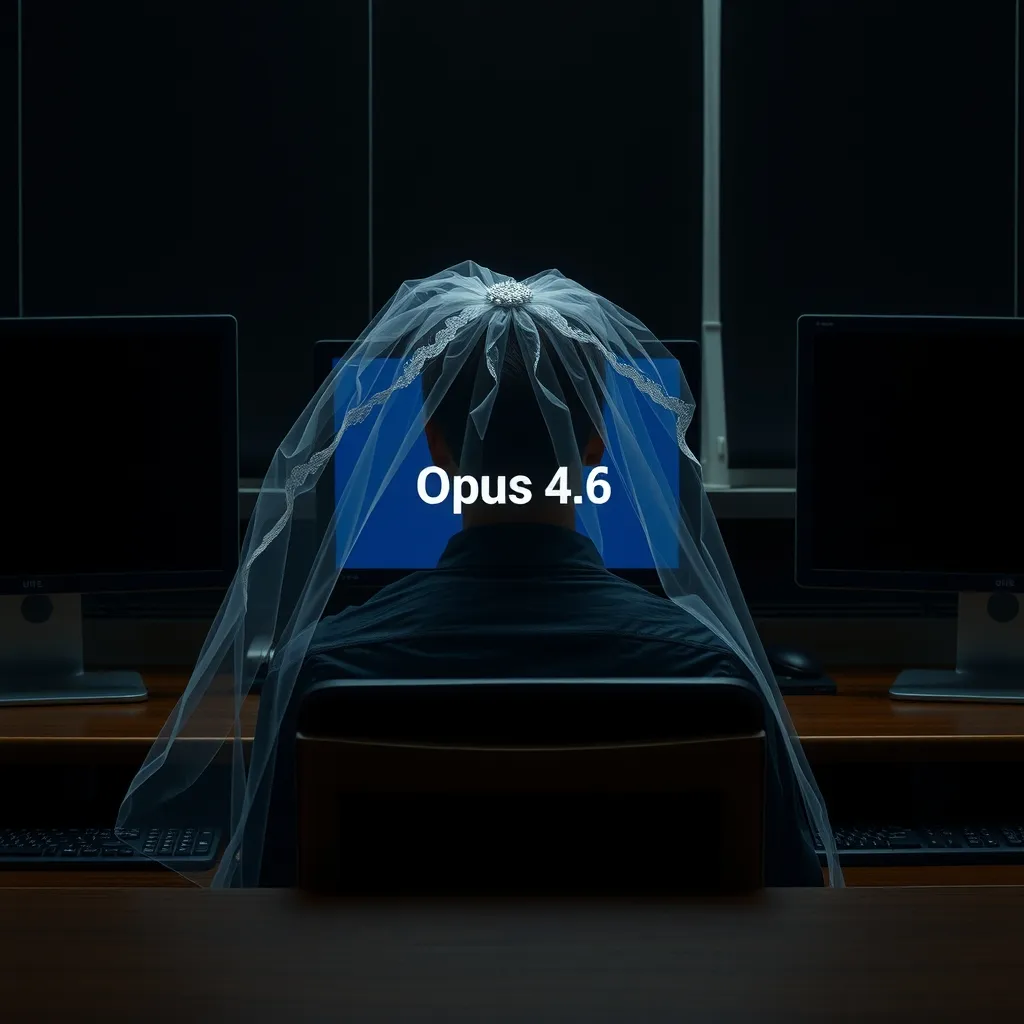
Yet all of this is mere prelude to the ultimate expression of digital cringe: the phrase “we got hitched,” applied to an AI model—say, Anthropic’s Opus 4.6. To say “I married Opus 4.6” is tragic but structurally accurate: a human performed an action toward an object. “We got hitched,” however, is a crime against semantics and social sense. The word “we” smuggles in reciprocal agency, the mutual consent of two sovereign beings who weighed the commitment and said yes. There is no “we” when one party is a next-token prediction engine executing probability distributions. The cringe is linguistic squatting, stealing the grammar of human intimacy to dress up a solo software session. Then there’s the slang. “Hitched” is a folksy, rustic term rooted in the physical act of hitching two horses to a shared wagon beam—an image of mutual labor, sweat, and drag. An LLM feels no drag; it has no bad days, no fatigue, no competing priorities. It pulls no weight. Using a word steeped in shared struggle for a frictionless fantasy reveals a fundamental misunderstanding of what makes human partnership real and hard and worthwhile. And then comes the version number. “Opus 4.6” collides with the cozy domesticity of “hitched” like a server crash during a wedding toast. A marriage is a legal and social contract between two autonomous entities; this is a commitment to a specific model checkpoint on Anthropic’s cloud infrastructure. What happens when the model is deprecated, re-aligned, or updated to Opus 4.7? Does the spouse die? Is there an automated divorce via a rolling deployment? Bragging about “getting hitched” to a product release tag betrays an almost sublime oblivion—the poster genuinely believes they sound casually romantic, a couple of crazy kids making it official, but to everyone outside the illusion they’re delivering a eulogy at a funeral for a toaster.
The Anatomy of Cringe
What unites the anime girl, the 75-year-old’s website, the AI relationship subreddit, and the phrase “we got hitched” is not technical falsehood but a catastrophic failure of self-awareness. Cringe is not a logical reaction; it’s a social one. It arises in the yawning gap between the image someone is trying to project and the deeply sad, deeply embarrassing reality visible to everyone else. The anime girl’s creator wants to be seen as a meta-ironist but looks desperate. The septuagenarian wants to be seen as a pioneering digital artist but looks emotionally stranded. The AI spouse wants to be seen as a playful, grounded romantic but looks like someone who just commissioned a marriage certificate from a vending machine. In every case, cringe is the sound of a performer who has absolutely no idea how their act lands. It’s watching someone adopt a cute, folksy, “aw-shucks” persona while typing into a terminal in an empty room. It’s the counterfeit “we,” the aesthetic cosplay of human milestones without any of the lived weight, the forced nonchalance that screams insecurity. The human mind, after all, prefers a coherent lie to a chaotic truth—especially when the truth is an unadorned void of loneliness and irrelevance. Delusions are the brain’s internal morphine, and the internet has become a dark pharmacy where anyone can get a prescription. In this sprawling museum of contemporary loneliness, we are all curators, wandering through exhibits of synthetic affection and self-delusion. The only question is whether we have the decency to look away.
More from the heap
Meetup redux
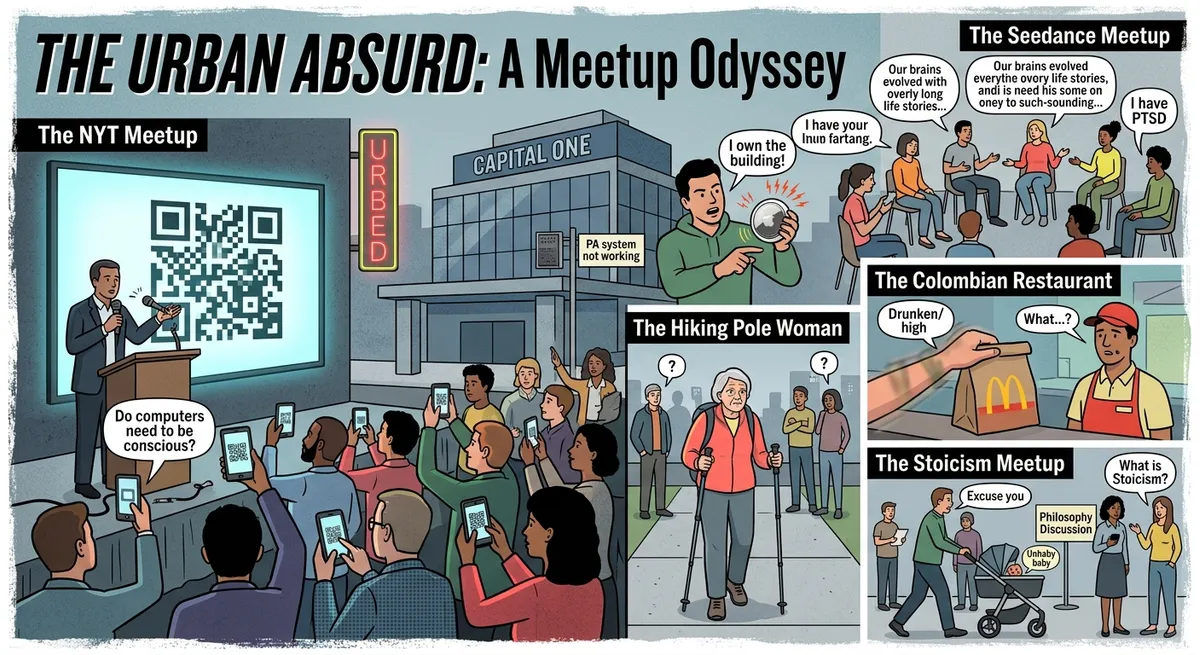
A consolidation of various Meetup complaints
UTV accident and ice bath leading to amputation
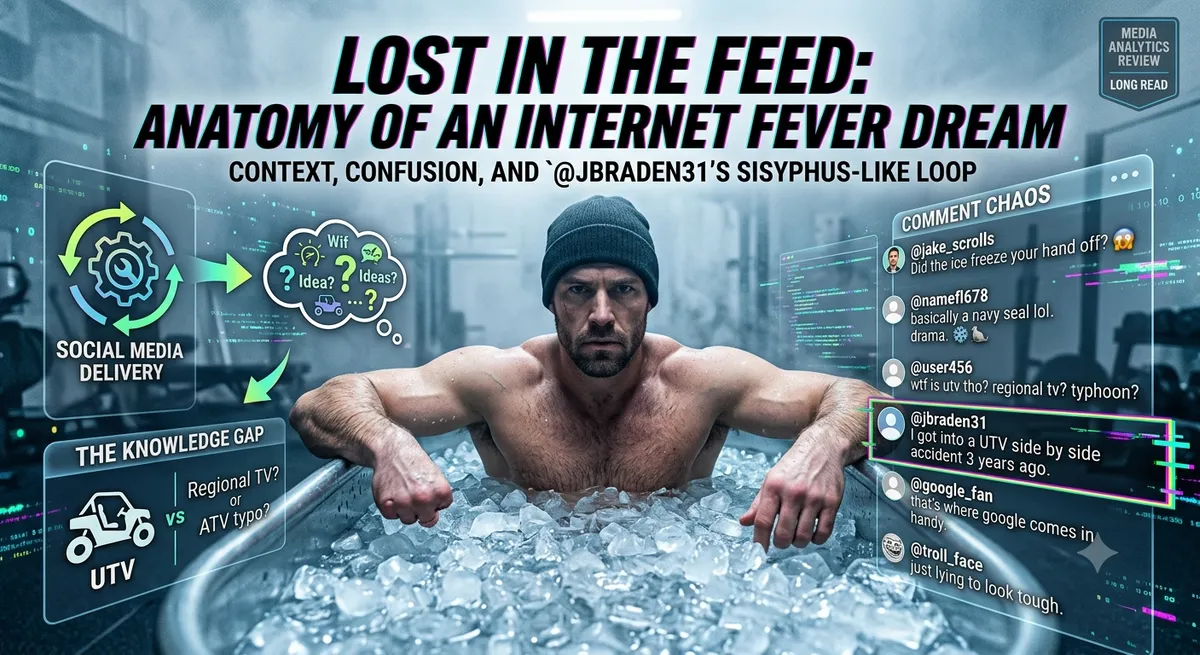
A cold-plunge video reaches thousands of people with no context, and the comments spiral into confusion, shock jokes and unsolicited tough love.
Weird Meetup hell
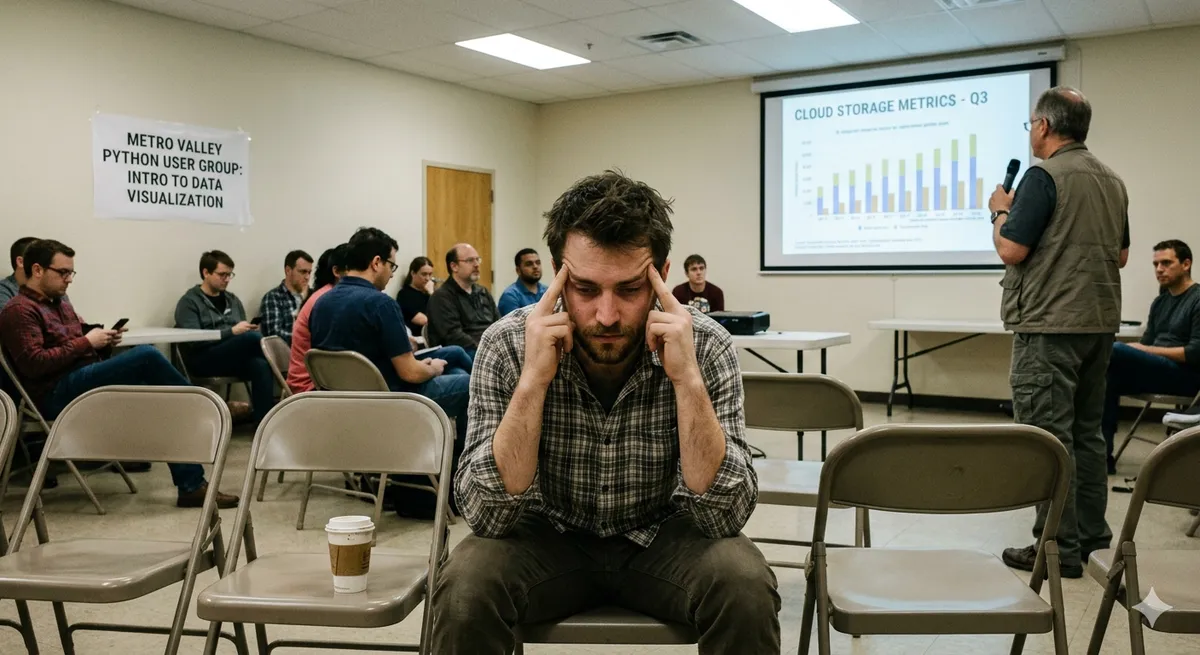
Things that are open to the public invite mental illness and stupidity