UTV accident and ice bath leading to amputation
A cold-plunge video reaches thousands of people with no context, and the comments spiral into confusion, shock jokes and unsolicited tough love.
- Platforms
- Reviewed
- July 27, 2026
- Read
- 14 min
- By
- Jacques Strap
WARNING: Do not try to read this entire article!
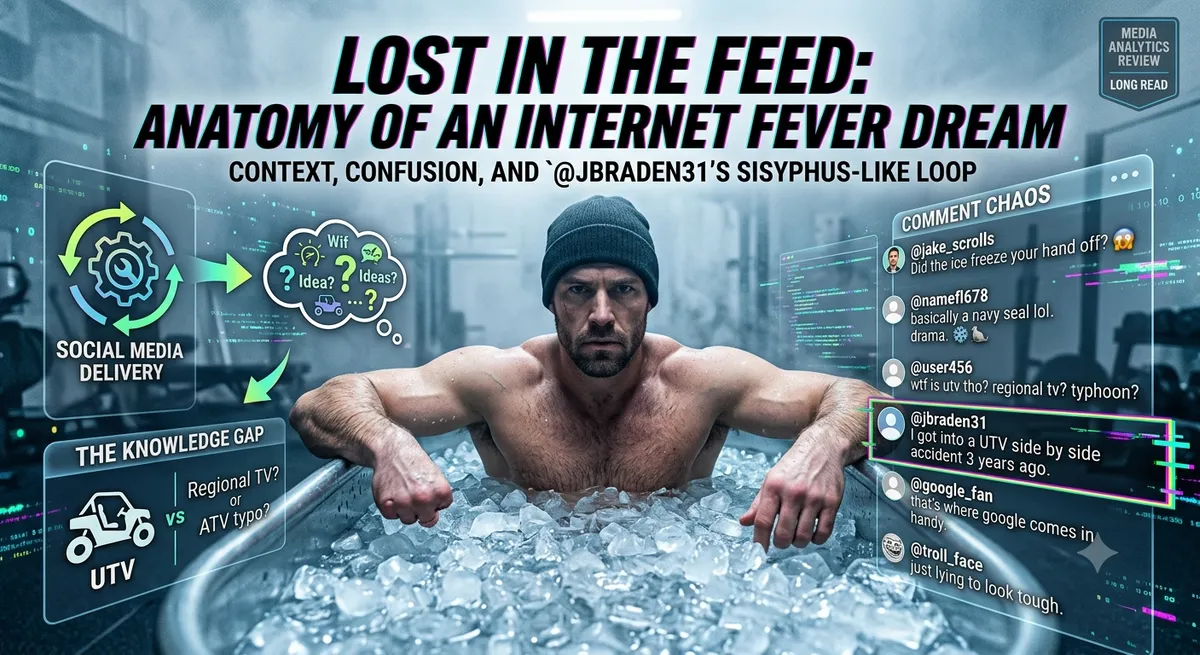
Recently and interestingly, @jbraden31 posted a video on YouTube of him going into an ice bath and talking about getting his hand amputated. Looking strictly at @jbraden31’s post, the core issue is an extreme breakdown in context caused by algorithmic social media delivery. The creator posted content featuring an ice bath or cold plunge, but because his hand/finger amputation is visible, thousands of casual viewers landed on the video without knowing his history.
This context gap triggers two distinct reactions in the comment section. First, there is rampant, absurd confusion. Dozens of people genuinely believe or incredulously ask if taking a cold plunge caused his hand to be amputated or frozen off, prompting the creator to repeatedly clarify in the replies that his injury was actually the result of a severe UTV accident from three years prior. Second, the comment section rapidly devolves into standard internet noise, where people cycle through dark shock humor, jokes about masturbation, or unsolicited “tough love” advice telling him his injury could be worse and that he shouldn’t complain.
The rest of the space becomes a battlefield between cynicism and defense. Trolls jump in with non-sequiturs and inflammatory slurs, while supportive followers try to step in to defend his discipline and applaud his recovery journey. Ultimately, the thread highlights how posting a specific niche activity like cold plunging while living with an apparent physical disability causes the algorithm to push the video to an audience that lacks critical backstory, turning a standard video into a chaotic cross-section of confusion, hostility, and support.

What makes this dynamic deeply weird isn’t just standard internet toxicity—it’s the complete breakdown of basic cause-and-effect logic when short-form media gets ripped out of context.
Here is why the whole interaction feels so surreal:
1. The Medical Nonsense (Cold Water = Amputation) The most bizarre part is how many people jump to the conclusion that dunking your head in an ice bath or doing a cold plunge somehow results in surgical limb amputation. Cold plunges are a widely known wellness trend. Instead of taking two seconds to think, “Oh, this guy doing a cold plunge happens to be an amputee,” multiple commenters unironically ask how a dip in icy water caused his hand to fall off or get cut off. The total absence of basic critical thinking transforms the comment section into a fever dream where ice water eats limbs.
2. The Absurdity of the Misplaced “Navy SEAL” Sarcasm
Because viewers think the video is just a guy bragging about doing a cold plunge, people like @namefl678 attack him for being dramatic: “cold plunge and drunk your head? Bro, you’re basically a navy seal.” The weirdness compounds because the commenter thinks they are mocking a pseudo-tough influencer overhyping a cold bath, completely missing that the man in the video is literally missing a hand. The insult lands in a weird void where the critic looks totally oblivious, and the comment section turns into a meta-argument about whether dunking your head makes you “tough.”
3. The Escalation into Total Non-Sequiturs Once an algorithm pushes a video into “viral confusion,” the comment section stops being about the content entirely and turns into a dumping ground for stray internet impulses. You have people arguing about whether he’s “man enough to show his face,” people dropping random slurs, people accusing him of lying, and people telling him to stop feeling sorry for himself when he didn’t even express self-pity in the first place.
4. The Creator’s Sisyphus-like Loop There’s an unsettling, almost dystopian element to the creator’s position. He lost a hand in a real, life-altering vehicle crash, adapted to it, and started making content. But because of how social media feeds work, every single time a video hits a new audience, he is forced to act as a human FAQ board, manually replying to dozens of people: “I got into a UTV side by side accident 3 years ago.” He’s stuck eternally explaining basic reality to a rolling wave of confused strangers who think his ice bath melted his hand off.
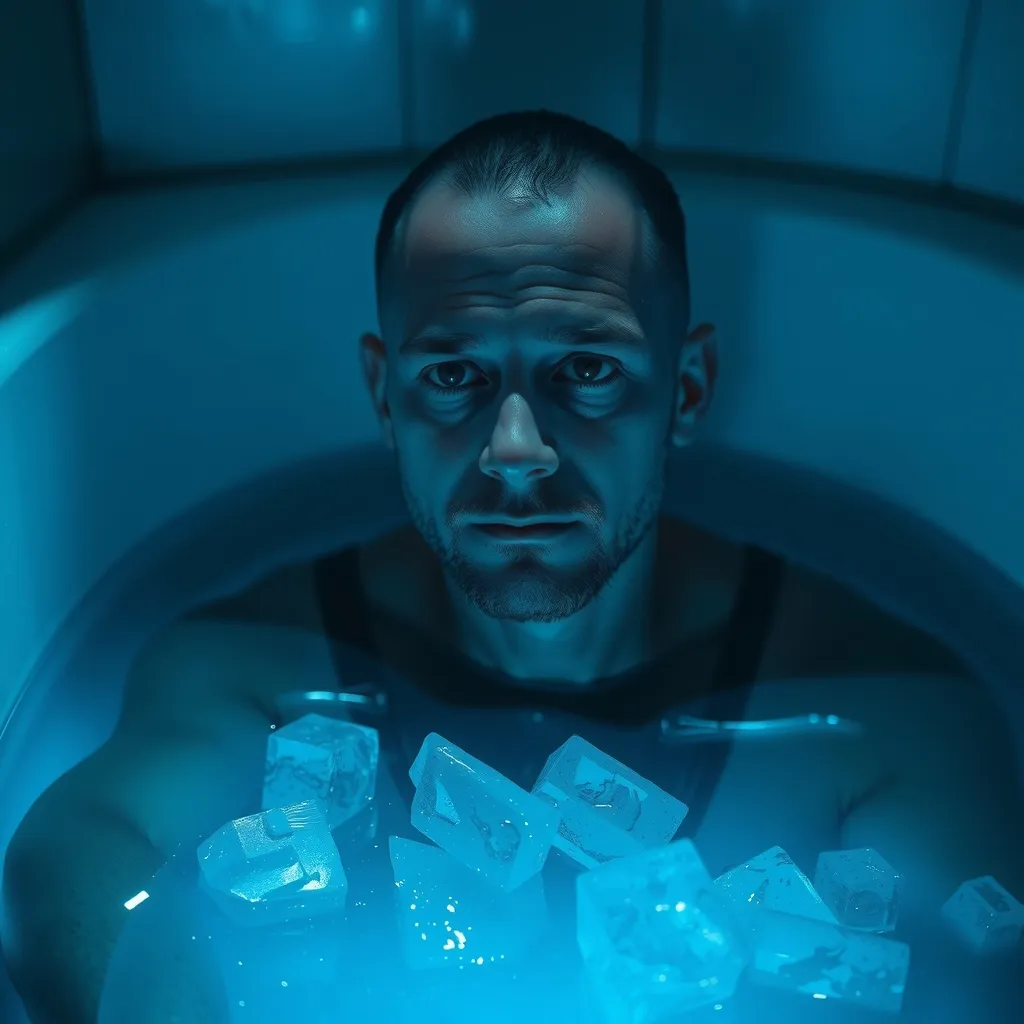
It’s genuinely bizarre how people in comment sections drop specialized acronyms as if they’re universal knowledge, and then expect everyone else to just “Google it.”
When someone asks a basic question like “what happened to your hand?”, replying with just “UTV accident” feels like a half-answer. Most people outside of specific off-road or rural subcultures don’t walk around with “Utility Task Vehicle” loaded in their stupid brain. To an average scroll-by viewer, “UTV” sounds like a regional TV station, an infection, or a typo for ATV.
The immediate counter-response from other commenters—“that’s where Google comes in handy”—is equally infuriating. When you’re lying in bed casually doomscrolling at the end of the day, your brain is running on low power. The entire point of social media is low-effort passive consumption; no one wants to leave the app, open a browser, type in a three-letter acronym, and sift through search results just to decipher a contextless comment on a 15-second clip.
It creates this weird passive-aggressive friction where the commenter feels superior for using a hyper-specific term, the confused person gets mocked for asking, and the person who is just tiredly trying to understand the video gets told to go do homework. It’s a classic case of people forgetting that what’s everyday terminology to them is total gibberish to everyone else.

No—his hand was not amputated because of an ice bath.
His hand was amputated because of a UTV (side-by-side) accident that happened three years prior.
The ice bath was completely unrelated to how he lost his hand. He was just taking a cold plunge in the video while already living as an amputee, but because the video lacked context, viewers wildly jumped to the conclusion that the icy water somehow caused his hand to be cut off.
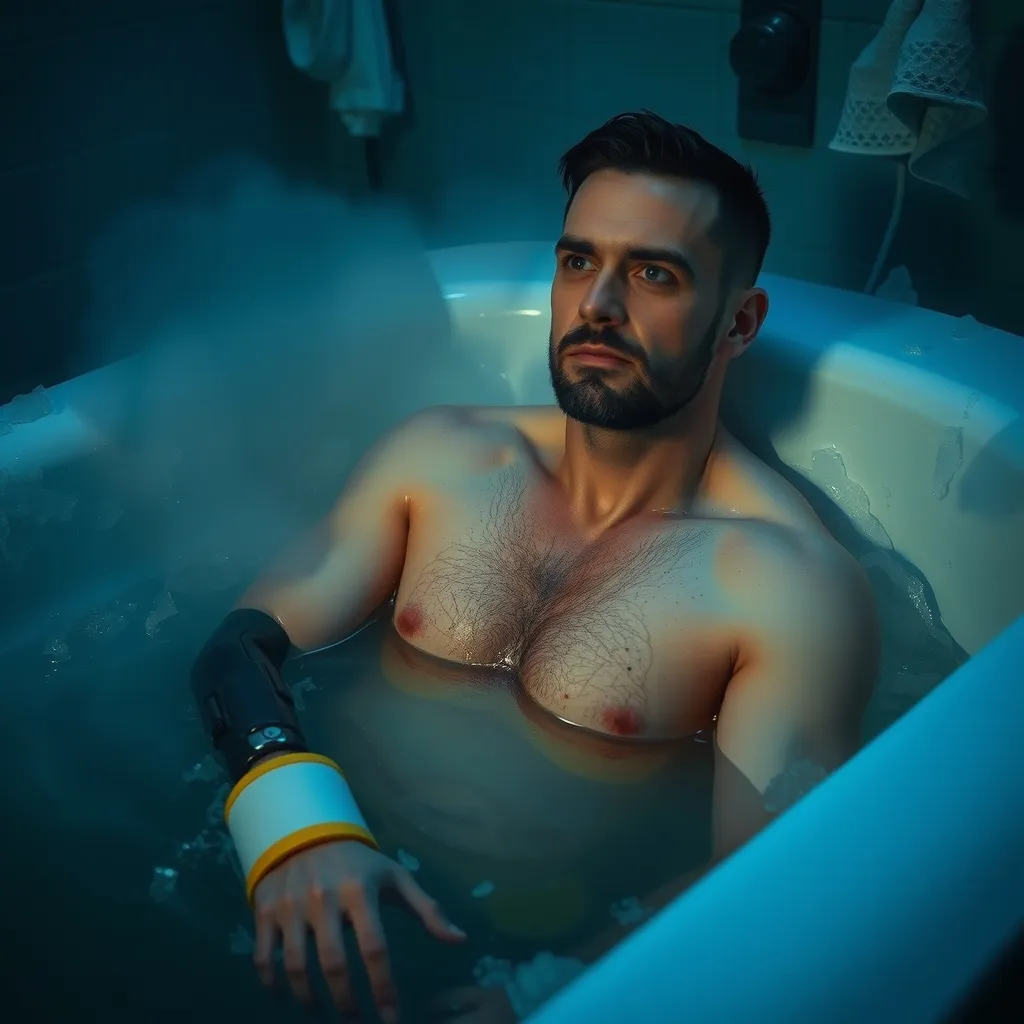
The core absurdity of the whole situation comes down to how human brain power completely flatlines during mindless social media scrolling, colliding head-first with how algorithms serve content without context.
Here is a breakdown of why this specific misunderstanding escalates so dramatically across every level of the interaction.
The Cognitive Gap and the Ice Bath Fallacy
When people scroll through short-form video feeds, they operate in a state of hyper-passive consumption. They aren’t critically analyzing media; they are processing visual cues in fractions of a second.
When a video shows a guy taking an intense, dramatic ice bath, and his hand or fingers are visibly missing or altered, the brain tries to build an immediate, lazy link between the two things. Instead of thinking, This person was already an amputee before stepping into this cold plunge, the human brain takes the path of least resistance: Ice bath + missing hand = the ice bath froze his hand off.
It sounds utterly ridiculous when stated out loud, but people genuinely entertain the idea because extreme cold can cause frostbite. They imagine some extreme, catastrophic scenario where he stayed in the ice for hours, got severe gangrene, and had to have his hand surgically removed. The sheer absurdity lies in assuming that a wellness trend video would document the exact moment someone destroyed their own limbs via thermal injury, rather than just showing a disabled guy participating in a normal workout or recovery routine.
The Acronym Barrier and “UTV”
When people finally ask for clarification in the comments—“What happened to your hand?”—the answer they get is often just two words: “UTV accident.”
To the person who typed it, “UTV” (Utility Task Vehicle) is an everyday, universally understood term. They picture a heavy side-by-side off-road vehicle rolling over on a trail—a notorious cause of severe crush injuries and amputations when limbs get caught under the roll cage.
To the average person doomscrolling in bed at 1:00 AM, “UTV” is complete gibberish. It sounds like:
- A regional public television station
- A rare bacterial infection
- A random typo for “ATV” or “SUV”
- A obscure military classification
When the exhausted scroller sees “UTV accident,” it answers virtually nothing. It swaps one mysterious medical mystery (the ice bath amputation) for an acronym mystery.
The “Just Google It” Intellectual Arrogance
When a confused viewer replies with “no one knows wtf that means,” the immediate counter-response from internet snobs is: “That’s where Google comes in handy.”
This attitude misunderstands the entire psychology of social media usage. No one opening Instagram or TikTok wants to be assigned homework. The moment a user has to exit the app, open Safari or Chrome, type in “UTV,” sift through search results for “UTV meaning,” and then manually connect the dots to off-road vehicles and crush injuries, the passive entertainment loop is broken.
Telling someone to “Google it” in a comment section isn’t actually helpful advice; it’s a micro-power-trip. It allows the commenter to act superior for knowing a niche piece of off-road vehicle terminology while mocking someone else for refusing to conduct a research project in the middle of a mindless scrolling session.
The Perpetually Misunderstood Creator
At the center of this entire circus is the creator, @jbraden31. He lived through a traumatic, life-altering rollover crash in an off-road vehicle, lost part of his hand, fought through recovery, and adapted his life. Now, he’s just trying to live normally, post fitness or recovery content, and do cold plunges like anyone else.
Yet, because of how algorithmic distribution works, every single time one of his videos hits a new, uninitiated audience, the exact same cycle resets:
- People freak out thinking the ice bath ate his hand off.
- People accuse him of lying or overhyping his “toughness.”
- People drop vague three-letter acronyms in the comments.
- Other people get angry that the acronym isn’t explained.
- He is forced to repeatedly type out the exact same sentence explaining his life trauma to an endless queue of confused, lazy strangers.
It is a bizarre, modern dystopian loop where a person’s real-life physical trauma gets reduced to a confusing, recurring puzzle for exhausted people staring at glowing glass screens.

The core reason “UTV accident” fails so spectacularly as an explanation is that the term relies on a massive cultural blind spot. The people throwing the acronym around assume it’s common sense, while for the overwhelming majority of the internet, it’s total gibberish that completely kills the flow of communication.
1. The Niche Terminology Delusion
To people who live in rural areas, work in agriculture, or participate in off-roading subcultures, “UTV” (Utility Task Vehicle) is as everyday a word as “truck” or “SUV.” They buy them, drive them, and see them everywhere. Because it’s so embedded in their daily vocabulary, they suffer from a cognitive bias known as the “curse of knowledge”—they literally cannot fathom that an average person wouldn’t know what it means.
To the rest of the world, though, the term is utterly nonexistent. Most people outside those specific subcultures call those vehicles “side-by-sides,” “buggies,” “dune buggies,” or just lump them in with “ATVs.” When someone drops “UTV” into a conversation, they are using specialized trade jargon as if it’s universal language. It’s like a software developer casually using a hyper-specific coding framework acronym in a general conversation and getting shocked when a waiter doesn’t know what it stands for.
2. Alphabetic Salad and Cognitive Overload
When a casual viewer reads the word “UTV,” their brain doesn’t instantly picture a four-wheel off-road vehicle rolling down a dirt trail. Instead, the brain hits a speed bump. Because three-letter acronyms are used for literally everything in modern life, “UTV” triggers a useless internal decoding process.
Is it a disease? Is it a local television network (like ATV or ITV)? Is it a weird medical procedure? Is it a typo for UTI or SUV?
By the time the reader processes that they don’t know what it means, the moment of basic curiosity has passed and been replaced by irritation. Instead of getting a simple, vivid image of what actually happened—“He flipped a trail buggy”—they get tossed a cold, clinical string of letters that explains zero about the actual physical event.
3. The Failure of Cause and Effect
The fundamental goal of answering “what happened?” is to help someone visualize cause and effect. “UTV accident” completely fails at this because it omits the actual mechanism of injury.
Saying “UTV accident” tells you the setting, but not the tragedy. A non-expert hearing “UTV” doesn’t automatically know that these vehicles have heavy steel roll cages, high centers of gravity, and open sides where limbs routinely get pinned or crushed during a rollover. Without that context, saying “UTV accident” to explain a lost hand is like saying “I had an office accident” to explain losing a foot—it leaves a massive, confusing gap between the vehicle and the severity of the injury.
4. The Entitled “Look It Up” Mindset
What makes it even worse is the bizarre online hostility that erupts when someone inevitably says, “What is a UTV?”
Instead of just clarifying in plain English, internet pedants treat the question like a personal insult or a sign of laziness. They treat a niche off-roading term like basic grade-school literacy. The result is a completely broken conversation where one person is confused by obscure jargon, another person is smugly guarding the definition, and nobody actually gets a clear picture of reality—all while the original creator’s real, heavy life story gets buried under a pile of pedantic fighting over three letters.

The term “UTV accident” completely fails as an explanation because most people simply have no mental reference point for what a UTV is supposed to be. When those three letters get dropped into a thread, it doesn’t build a visual picture in your mind; it just drops a meaningless wall of text that forces your brain to pause, stall, and try to construct meaning out of thin air.
For the vast majority of people, “UTV” sits completely outside daily vocabulary. Unless someone actively participates in off-roading subcultures, works on a farm, or lives in a rural area where these vehicles are everywhere, the acronym is total white noise. Most people know what an ATV or a quad is. They know what a dune buggy is. They know what a golf cart or a Jeep is. But “UTV” sounds like an obscure regional public television channel, a typo for a urinary tract infection, or some corporate software acronym. It lacks any immediate, intuitive connection to a motorized, heavy, four-wheeled vehicle flipping over in the dirt.
Because the term carries zero inherent meaning to an outsider, dropping “UTV accident” as a casual, two-word reply to someone asking “how did you lose your hand?” creates an absurd narrative void. It replaces a severe physical event with an abstract label. It tells you absolutely nothing about the mechanics of what actually occurred. A person hearing “UTV” doesn’t automatically picture a top-heavy, open-air trail vehicle equipped with a steel roll cage that can instantly pin an arm or crush a hand against the ground during a sudden rollover. Instead, they are left sitting there wondering how a random, clinical-sounding collection of three letters connects to a traumatic medical amputation.
The whole thing becomes a monument to dead-end communication. The commenter who types “UTV accident” assumes they’ve given a full, clear answer, completely blind to the fact that they are using hyper-niche industry jargon. The exhausted reader, meanwhile, is left staring at the screen, running through a mental list of what “U-T-V” could possibly stand for, only to come away empty-handed and annoyed. It swaps a real-world human tragedy for a mysterious acronym, leaving everyone in the dark while acting like the answer was clear as day.
More from the heap
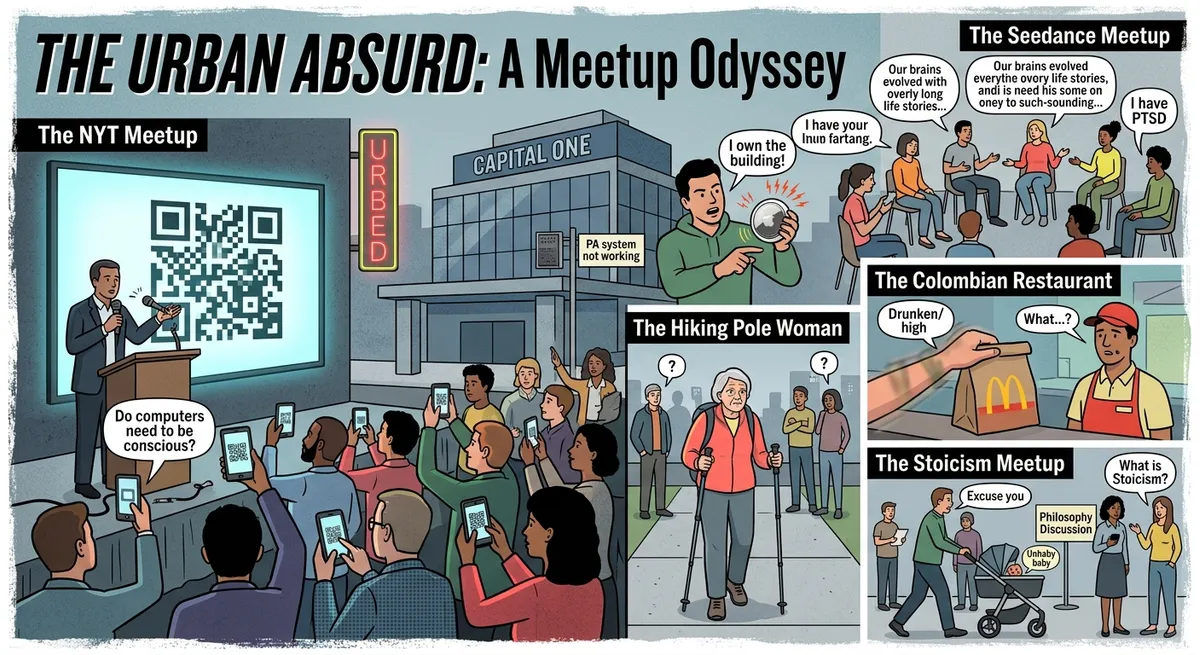
Meetup redux
A consolidation of various Meetup complaints

40,000 hours
Why the background noise is now the foreground, the internet became a closed loop, and a man is still listening to the same scream after 40,000 hours.

Bored Games
The New Board Game Renaissance is Just a Layer of Hell for People Who Want to Drink and Die