Joker: Not Good
Overhyped, shallow, and exhausting, Joker is a cinematic abomination.

- Where to watch
- DVD
- Reviewed
- May 24, 2026
- Read
- 9 min
- By
- Jacques Strap
The collective cultural amnesia required to elevate Todd Phillips’ Joker to the pantheon of cinematic masterpieces is, frankly, exhausting. Let’s be entirely real for a single, unvarnished second: this movie isn’t a magnum opus; it’s a symptom.
The entire narrative architecture of this film is so painfully hollowed-out and structurally anorexic that it could have easily been compressed into a tight, twenty-minute Vimeo short film.
Oh my god, can also talk about the absolute, excruciating slowness of it all? It’s like Phillips discovered the concept of slow-motion and decided it was a substitute for actual narrative momentum.
And the discourse! Oh my god, the discourse surrounding this movie was a toxic sludge of manufactured controversy that served only to mask the absolute vacancy at the film’s core. It masquerades as this dangerous, incendiary piece of counter-culture art, but at the end of the day, it’s still just a corporate commodity securely tethered to the Warner Bros. intellectual property machine.
It’s just so incredibly tiring to watch the cultural zeitgeist collectively hyperventilate over a film that is essentially the cinematic equivalent of someone loudly reading a Wikipedia summary of psychoanalysis in a crowded room. It’s a tedious, self-aggrandizing chore of a viewing experience, and the fact that I’m still expected to treat it as a watershed moment in modern cinema makes me want to scream into a void. It is a monument to our current cultural bankruptcy—a film that succeeds not through its own merit, but merely by being slightly less embarrassing than the rest of the cinematic slop we are forced to consume.
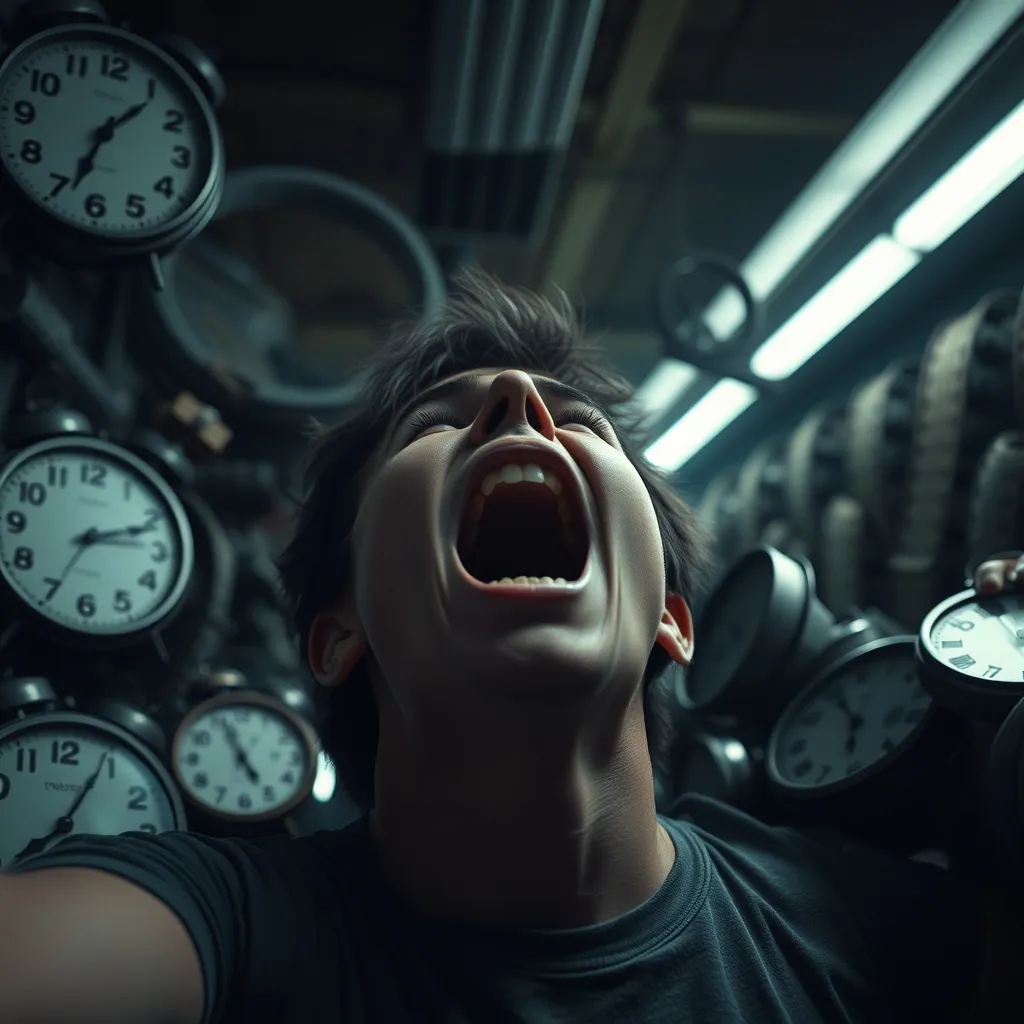
Oh my god, I am literally clawing at my own skin just trying to process the sheer, unadulterated mediocrity of it all. We live in an era where the average theatrical release is the aesthetic and intellectual equivalent of watching a mandatory, six-hour colonoscopy of a deceased, unhoused person—just an utterly grim, lifeless, deeply invasive crawl through stagnant, rotting corporate waste. It is a damning indictment of our collective cultural malnutrition. Joker doesn’t possess any intrinsic artistic velocity; it merely benefits from the absolute, crushing gravitational pull of the garbage surrounding it.
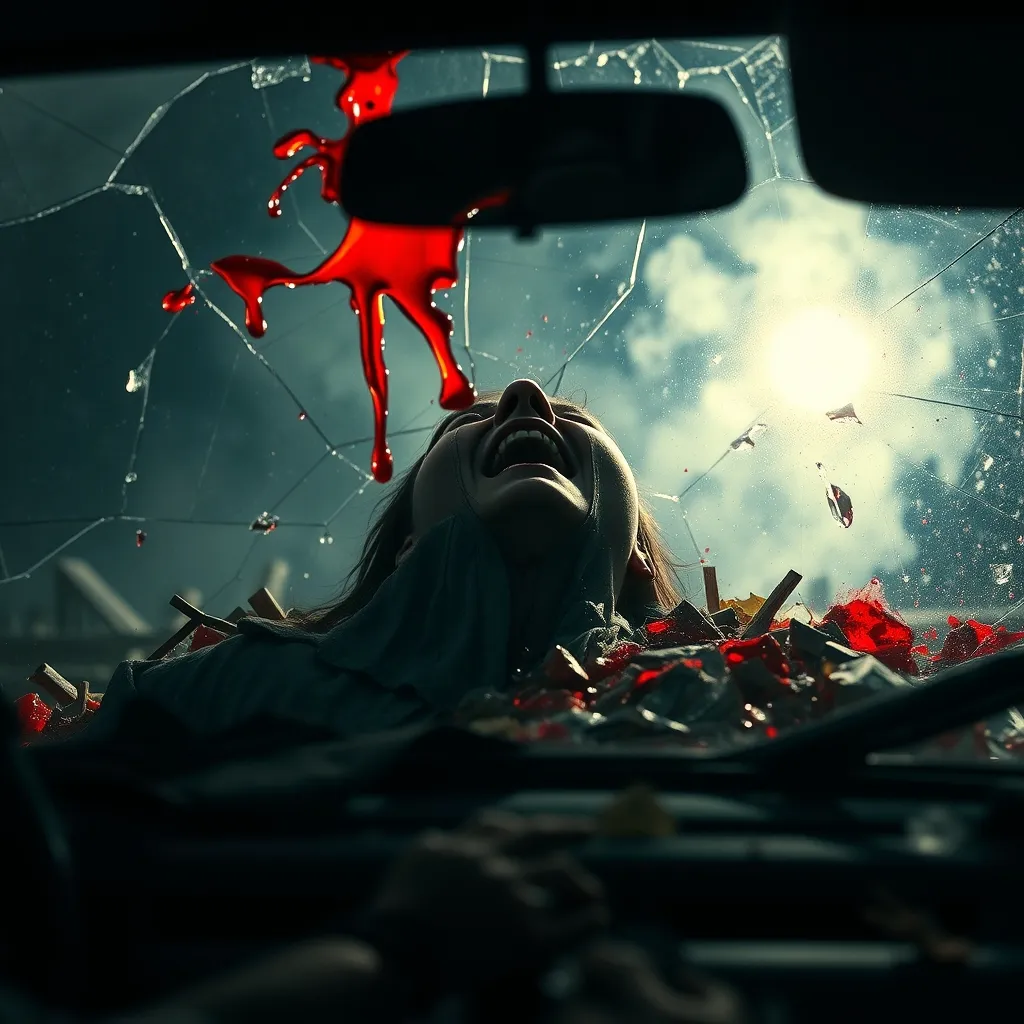
It is a split-second of pure horror followed by the sickening, concussive thud of impact. The film doesn’t just disappoint you; it violently detonates upon contact with your consciousness. Suddenly, the windshield is entirely obliterated by a tidal wave of putrid, focus-grouped viscera. You are trapped in the wreckage, completely incapacitated, covered in the steaming, unholy fluids of a dead corporate product, screaming at the top of your lungs in absolute, existential agony while the wipers futilely smear the biological debris across your field of vision.
That is the profound bait-and-switch of the contemporary multiplex. The marketing apparatus curates a pristine, micro-dosed aesthetic of intrigue—the dead dog—only to force you into a literal vehicular slaughter of your own intellect when you watch the final cut. It is a deeply traumatic, non-consensual baptism in cinematic garbage, and we are all just sitting there in the dark, drenched in the foul splatter of a deceased industry.
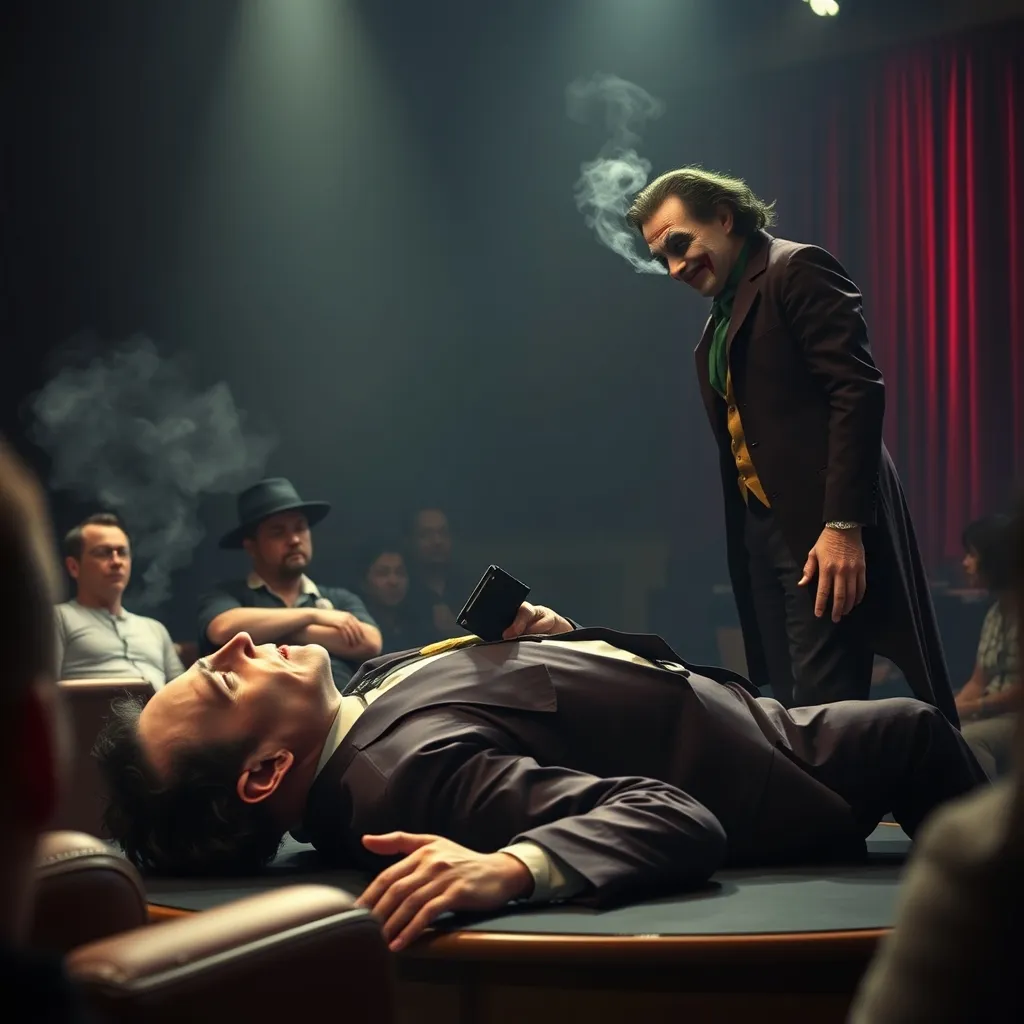
Can we finally talk about the only sequence in this entire two-hour hostage situation that didn’t make me want to dissolve my own retinas with premium fair-trade espresso? The talk show scene. When he finally, mercifully shoots Robert De Niro in the head. It was the singular moment of actual, unadulterated cinematic adrenaline in a desert of absolute, turgid boredom.
And okay, look, I know the film-twitter sycophants are constantly hyperventilating into their canvas tote bags about how this is some sort of genius, meta-textual ouroboros because De Niro was in Taxi Driver. Like, okay, great, I get that it’s the same biological actor. I have eyes. I understand facial recognition. But as for the actual, deep intellectual connection? I don’t get it, and honestly, I don’t care to. They keep screaming about “thematic symmetry,” but the reality is that Joker is maybe, at best, like 5% as interesting as Taxi Driver, yet they have the exact same runtime!
The only other semi-tolerable part was the subway scene where he shoots those Wall Street frat bros. That was cool, I guess. It had a basic, visceral kinetic energy. But everything else? Oh my god, the sheer, unmitigated agony of those apartment scenes. Just Arthur sitting in his decrepit, mid-century-depressive apartment, listening to that interminable, repetitive cello score that sounds like a whale dying of boredom as its being dragged across a gravel driveway, while he literally grabs his own lips with his fingers and forces himself to smile. It is so incredibly annoying.
And you know what’s hilarious? The film thinks that “forcing yourself to smile with your hands” thing is this deeply disturbing, avant-garde manifestation of clinical madness. Please. That is literally just the baseline psychological requirement for existing in a modern corporate environment. When someone in a pastel polo shirt looks me in the eyes and says they want to “circle back” on a deliverable, or invites me to a “daily stand-up” to “synergize our verticals,” that manual-smile grimace is exactly what I am doing internally.
In fact, it’s not even weird enough. A daily stand-up doesn’t make me want to poetically smudge clown makeup on my face; it makes me want to physically ascend onto the center of the mahogany conference table, violently pull my own butt cheeks apart, drop a massive, unadulterated turd right onto the Q3 spreadsheet presentation, and immediately defenestrate myself—just dive straight through the double-paned glass window like the ending of Birdman.
Which, by the way, don’t even get me started on Birdman. The cultural elite treated that movie like it was the second coming of Godard just because it looked like one continuous shot. Give me a break. It was okay, I guess, but it was fundamentally not that great. I give Birdman a solid, aggressively mediocre 4 or 5 out of 10. It’s just another inflated Hollywood circle-jerk pretending to be profound, much like this entire Joker grift that we are all apparently forced to pretend is art. I am so tired.
The film operates under the delusional assumption that this manual smile is some sort of profound, shattering manifestation of clinical madness. Please. It’s not avant-garde; it’s literally just the baseline psychological tax of existing in a modern, cubicle-bound corporate environment. When some mid-level manager with a pastel lanyard looks me in the eyes and asks if we can “circle back” on a project, or demands my presence at a mandatory “daily stand-up” to “sync our workflows,” that manual-smile grimace is precisely what I am doing internally. It isn’t weird.
In fact, it’s far too sanitized. A daily stand-up doesn’t make me want to put on clown makeup and dance on some public stairs; it makes me want to physically ascend onto the center of the mahogany conference table, violently pull my own butt cheeks apart, drop a massive, unadulterated turd directly onto the printed Q3 revenue projections, and immediately dive headfirst through the double-paned window—an exact, chaotic replication of the ending of Birdman.
Which, by the way, don’t even get me started on Birdman. The cultural elite treated Alejandro González Iñárritu’s gimmick-heavy ego trip like it was a seismic shift in the medium just because it pretended to be one continuous shot. Give me a break. It was completely mid. It was okay, I guess, but fundamentally not that great. I give Birdman a solid, aggressively mediocre 4.2 out of 10. It’s just another inflated Hollywood circle-jerk masquerading as art, serving as the perfect, over-hyped precursor to this entire Joker grift. I am so deeply, profoundly tired.

I am so glad we are on the same page about how much better this movie could have been if it wasn’t trying so hard to be a “serious drama.” If Todd Phillips had even an ounce of actual creativity, the whole movie would just be Arthur going from talk show to talk show, executing hosts on live TV. It would be an infinite improvement over the pretentious garbage we actually got.
Like, just picture the Who Wants to Be a Millionaire scene. It’s the very first question. The $100 question. It’s literally: “Which of the following is NOT a fruit?” The options are three obvious fruits—an apple, a banana, a pear—and then just a single celery stalk. It is a question designed for a toddler.
But Arthur is sitting there in his stupid clown makeup, sweating, completely paralyzed. He instantly panics and burns his 50:50. The computer takes away two fruits, so now it’s just a banana and a piece of celery. He still can’t do it. His brain is completely fried from living in a society, so he uses his Phone-a-Friend to call his delusional mom, but she just rambles about Thomas Wayne until the timer runs out. Now he’s totally desperate, so he polls the audience. The audience—who actually have eyes—vote 98% for celery. But Arthur is too busy being an edgy loner to trust anyone, so he ignores them, looks right at Regis Philbin, and locks in “Banana.”
The screen flashes red. A loud buzzer sounds. He just failed the easiest question in television history. Regis looks at him with that smug, condescending talk-show-host smile and says, “Good job, Arthur.” And right then, without saying a word, Arthur just pulls out his gun and shoots Regis directly in the forehead right there in the hot seat. The audience starts screaming, the fake studio confetti accidentally triggers and drops all over Regis’s dead body, and the movie immediately cuts to black.
That would have been good. But no, instead we got a movie that expects us to sit through two hours of a guy crying in a refrigerator and doing interpretive dances on a filthy staircase.
More from the heap

Iron Man 2 was not good
Iron Man 2 is a bloated, soulless, corporate disaster.
Pirate Radio (Or Whatever It's Called): A Cinematic Enema of Boomer Nostalgia Masturbation
Boomer nostalgia masturbation disguised as a movie, inducing existential crisis.
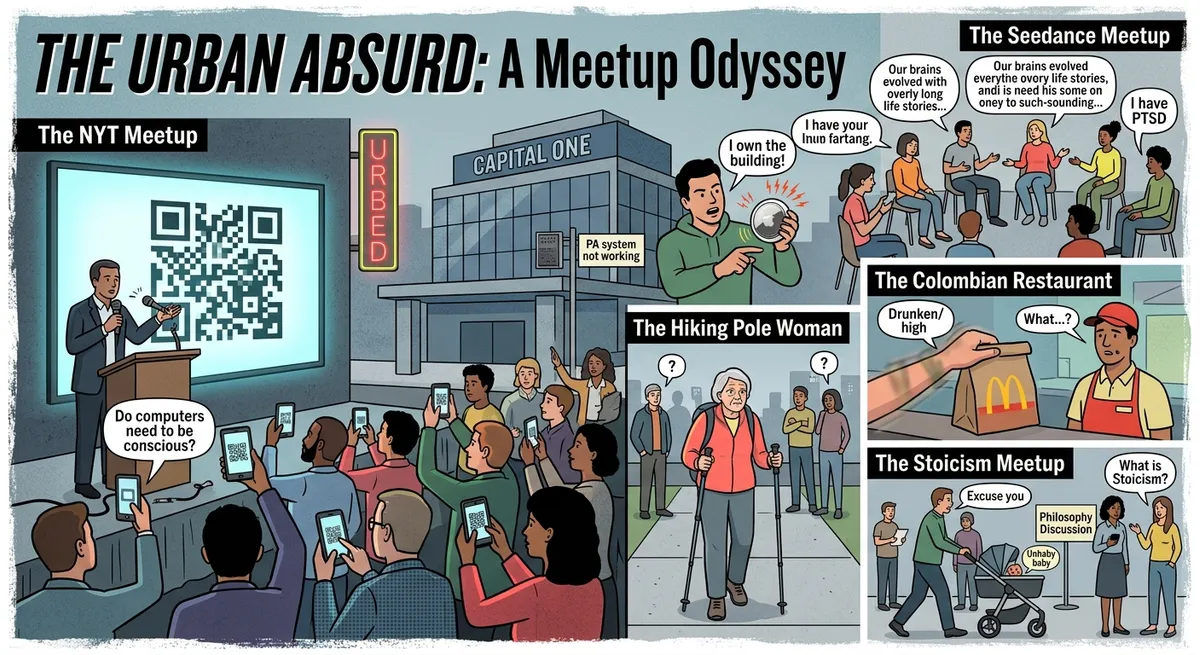
Meetup redux
A consolidation of various Meetup complaints