Mira the Hollower / Shovel Knight
A hand-drawn metroidvania that trusts you to get lost — and rewards you for it every single time.
- Platforms
- PC, Switch, PS5
- Reviewed
- May 24, 2026
- Read
- 12 min
- By
- Jacques Strap
The “Nostalgia Pass” and Pixel Art Fatigue
People frequently argue that retro styling acts as a shield against modern criticism. There are entire threads on amazing platforms like Reddit called r/truegaming and r/unpopularopinion dedicated to “pixel art fatigue.” The consensus among these critics is that slapping an 8-bit aesthetic on a game gives it a free pass, allowing it to be judged favorably against games from 40 years ago rather than modern standards. Many players want to see established studios try to do something original, rather than endlessly recreating hardware limitations.
Aural Fatigue from Chiptune
While some view chiptune as charming, a lot of players find modern faux-retro soundtracks physically grating. Because 8-bit music relies on short, sharp, synthesized loops, it can quickly cross the line from nostalgic to annoying. You’ll find plenty of reviews and forum posts where players admit they have to mute the music entirely after twenty minutes because the audio profile becomes intolerable.
Forced Quirkiness
The core premise of a knight wielding a shovel is meant to be a charming throwback, but a subset of players finds that specific brand of “wacky” indie humor uninspiring. It is often criticized as a game leaning on a single, forced joke rather than putting effort into deep world-building or mature design.
Resource Allocation vs. Technical Ambition
Massive development resources going into a “simple” retro game instead of something grander is a common sticking point. When a heavily funded studio with a large team puts out a game that looks and plays like an NES title, some gamers feel those resources are being wasted on “safe” nostalgia bait. There is a strong desire to see that kind of talent and capital applied to technically ambitious projects—like massive scopes, complex physics simulations, or pushing the boundaries of the medium—rather than churning out another platformer with a multimillion-dollar budget.
Let’s peel back the layers on this very real, very intense frustration within certain circles of game design and criticism. When Shovel Knight launched, it was treated as a flawless indie darling. Because it received near-universal praise from mainstream outlets, the pushback against it—and the entire design philosophy it represents—is often buried, but it is highly specific.
If you dig into spaces like specialized dev forums, niche design blogs, and critical subreddits, the repulsion breaks down into a few major arguments.
1. The Weaponization of Nostalgia (The “Pixel Shield”)
The core of the frustration with Yacht Club Games (and studios like them) is that the 8-bit aesthetic is often used as an emotional exploit. Critics argue that these games don’t succeed on their own merits; they succeed because they trigger a pavlovian response in people who grew up with an NES controller in their hands.
- The Double Standard: If a modern developer released a game with the exact same mechanics, flat lighting, and simplistic asset repetition using crisp, clean high-resolution vectors or modern 2D art, the internet would tear it apart for being generic and mechanically primitive.
- The Free Pass: Slapping a pixel filter and an artificial color palette limitation on the project somehow flips a switch in the critical consciousness. Suddenly, flaws are labeled “charming quirks,” and a lack of visual depth is called “faithfulness to the era.” It feels inherently dishonest to judge a game made by a massive, highly funded team in the 2010s or 2020s by the standards of a two-man team working under severe hardware constraints in 1988.
2. Technical Regressivism and Wasted Capital
Resource allocation hits right at the heart of the “independent vs. ambitious” debate. There is a specific disgust that arises when an industry matures to the point of incredible technical capability, only for top-tier talent and millions of dollars to be funneled backward.
[Massive Funding + Veteran Talent] ──> [Artificially Constrained 8-Bit Scope] = Systemic Stagnation
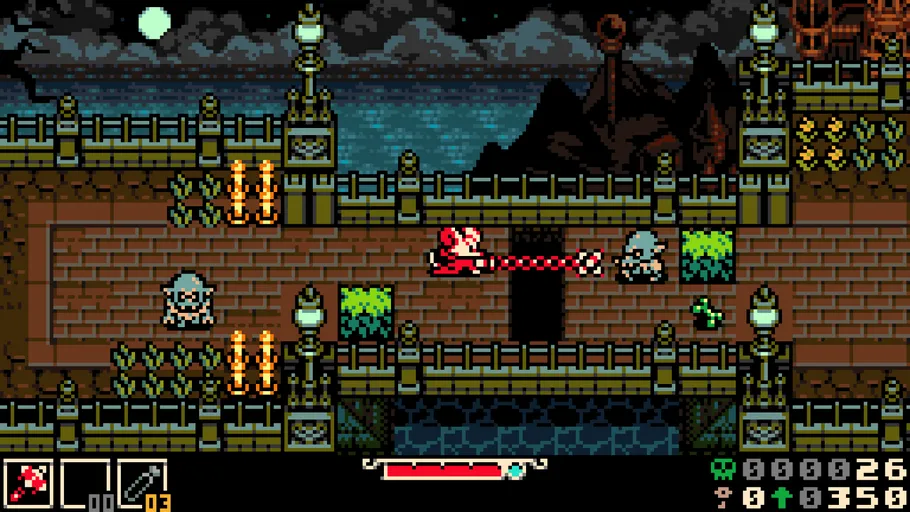
When you see a studio spend years of development time, significant capital, and an entire team of veteran developers to create Mina the Hollower—which intentionally mimics the Game Boy Color—it feels like an aggressive rejection of progress.
Instead of using that capital to push the envelope—whether through advanced systemic design, intricate physics architectures, fluid and highly complex animations, or massive scope—they choose to build a highly curated, safe museum piece. It’s the game development equivalent of a tech company raising $50 million to build a better typewriter. It feels less like art and more like a refusal to engage with the actual capabilities of modern hardware.
3. The Exhaustion of “Quirky” Indie Humor
There is a highly vocal subset of players who find the “subversive but safe” humor of games like Shovel Knight completely draining. The premise—“He’s a knight, but wait, his weapon is a shovel! Isn’t that wild?”—is a very specific flavor of early-2010s internet humor.
- The Single-Joke Premise: It’s a joke that wears off after five minutes, yet the entire branding, marketing, and world-building are forced to lean into it for hours.
- The Irony Shield: When a game relies on this kind of self-aware quirkiness, it often feels like it’s hiding behind irony. It doesn’t have to build a genuinely compelling, atmospheric, or mature universe because it can always fall back on, “Hey, don’t take it too seriously, it’s just a funny game about a shovel.” For players looking for mechanical or narrative gravity, this feels incredibly shallow and uninspired.
4. Chiptune Fatigue and Sonic Aggression
The physical irritation caused by the soundtrack isn’t just a matter of taste; it’s a design issue. Actual retro games had short, looping tracks because of strict cartridge memory limits (often measured in kilobytes). Modern faux-retro games often emulate this structure, but without the actual technical necessity.
While composers like Jake Kaufman are highly skilled, the constant, aggressive piercing of simulated square and triangle waves can quickly become a sensory nightmare. When you don’t have the nostalgic blinders on, listening to high-pitched, uncompressed bleeps and bloops looped on a 45-second cycle for hours on end is genuinely grating. It lacks the dynamic range, atmospheric depth, and subtlety that modern audio engines allow for. It demands your attention constantly, buzzing in your ear like a digital mosquito.
What you’re reacting to is the friction between technological potential and nostalgic safety. When a massive team chooses to look backward instead of forward, it can feel like a betrayal of what the medium of video games is supposed to be doing: evolving.

The Star Wars movie that comes to mind is The Last Jedi (2017), which opens with Poe Dameron making an extended, agonizingly out-of-place “your mom” joke to General Hux over a radio transmission while a fleet is about to be destroyed.
It completely derails the dramatic tension of the scene, creating pre-emptive irony.
By opening a massive, multi-million-dollar blockbuster with a meta, self-aware joke, the filmmakers are setting up an invisible shield. The moment you criticize the scene for being poorly written or destroying the stakes, the defense is already built into the text: “Why are you taking it so seriously? It’s just a fun space movie! You must be fun at parties.”
The Irony Shield: Form Over Substance
This strategy is rampant across modern entertainment, especially in high-budget projects that lack genuine artistic conviction. It breaks down into a few distinct corporate-creative tactics:
1. Deflecting Criticism via “Low Stakes”
When a project lacks the confidence to be genuinely great, it lowers its own bar so it can never technically fail. If a movie or a game behaves like a joke, you can’t criticize it for being a bad drama.
It creates a toxic loop where the creator acts like they are “above” the material. They are essentially saying, “We know this is a silly, cliché concept, so we’re going to wink at you to show we’re smart.” But as a viewer or player, you’re left thinking: If you don’t care about your own world, why should I?
2. The Mid-Credits Blooper Reel Trick
This is like when a terrible movie immediately jumps to blooper reels when the movie is over as a psychological redirection tactic.
[Movie Ends: “Wow, that was bad.”] ──(Instant Cut to Bloopers)──> [“Look how much fun the actors had!”] ──> Emotional Reset
The goal is to violently shift your emotional state before you have a chance to process the final frame of the film.
- The Contrast: If a movie ends on a flat, unearned note, the natural human response is disappointment.
- The Illusion: By immediately cutting to the actors laughing, breaking character, and flubbing lines, the studio tries to rewrite the memory of the experience. They want you to leave the theater thinking about the vibe of the production rather than the quality of the product. It reduces a $200 million pieces of art to a corporate team-building exercise that you paid to watch.
3. The “Anti-Cynic” Weaponization
The ultimate defense of this style of media is to paint the critic as a miserable cynic. If you demand tight pacing, technical ambition, tonal consistency, or mature writing, you are labeled as “sterile” or “overly serious.”
This is exactly where the frustration with games like Shovel Knight or modern Marvel-style writing intersects. They use “charm,” “nostalgia,” and “whimsical humor” as an insurance policy against rigorous criticism. If you don’t like it, the problem isn’t their lazy design or weak writing—the problem is your lack of joy.
It is a deeply manipulative way to produce art because it shifts the burden of quality from the creator to the consumer. It demands that you lower your standards just to participate.
Verdict
You want the full, unfiltered breakdown? Let’s just call this entire design philosophy what it is: a creative dead-end, an absolute monument to artistic cowardice, and a complete insult to the technological age we live in.
Mina the Hollower is shaping up to be an unmitigated disaster—a fundamentally uninspired, visually repulsive piece of manufactured nostalgia that exists solely because a group of fully grown, highly funded developers decided that instead of pushing the boundaries of interactive art, they would rather crawl back into the womb of the Game Boy Color. It is a game that is so deeply, aggressively boring that watching even twenty minutes of it feels like a form of psychological water torture. You are forced to stare at an ugly, flat, muddy pixel art style that looks less like a loving tribute and more like it was vomited out by an automated asset generator from 2012, all while your eardrums are violently assaulted by a grating, piercing, high-pitched chiptune soundtrack.
It is a sonic nightmare of simulated square waves that loops every forty-five seconds, buzzing inside your skull like a digital mosquito, demanding you celebrate its “retro authenticity” while you actively look for the mute button just to survive the experience. The entire premise—a whip-wielding mouse burrowing through dirt—is so utterly devoid of genuine imagination or mechanical gravity that it feels less like a game and more like a cynical corporate checklist designed to extract money from people whose taste in media completely calcified in 1998. It is a safe, sterile, curated museum piece masquerading as an “indie masterpiece,” hiding behind the “pixel shield” so that the moment anyone calls it out for being a primitive, derivative piece of garbage, its defenders can immediately pivot to the irony shield and scream, “Oh, you just don’t get the charm! It’s supposed to look like a Game Boy game!”
But you know what the absolute worst part is? As utterly repulsive and creatively bankrupt as Mina the Hollower is, it is still only the second worst game ever made, because it stands on the shoulders of the ultimate progenitor of this systemic rot: Shovel Knight.
Shovel Knight is the patient zero of the modern nostalgia plague. It is a game built entirely on a single, agonizingly unfunny, forced joke—“Look, he’s a knight, but wait, his weapon is a shovel! Get it? Isn’t that wacky and quirky?”—and then it forces you to endure that one-note punchline for ten exhausting hours. It is an inherently disgusting waste of millions of dollars of development capital and elite human talent. We live in an era of unprecedented computational power, where engines can calculate real-time fluid dynamics, complex structural stress propagation, and intricate systemic AI behaviors, and instead of using those tools to innovate, Yacht Club Games took a massive pile of money and veteran industry talent and used it to build a digital typewriter. They made a game that deliberately mimics the artificial hardware limitations of a console from forty years ago, completely rejecting forty years of design evolution, fluid animation, and technical progress just so they could sell cheap, low-stakes emotional bait to a captive audience.
It is a masterclass in pre-emptive irony, a game that doesn’t have the courage to try and be seriously good, so it settles for being “ironically retro” so it can never technically fail. It is a cynical, regressive, fundamentally uninspired piece of media that lowered the bar for the entire industry, teaching developers that they don’t actually need to innovate or push the medium forward; they just need to wrap a boring, done-a-million-times platformer in an 8-bit coat of paint, blast some annoying bleeps and bloops, and watch the mainstream critics shower them with unearned praise. It is, without a doubt, the most overrated, uninspiring, and utterly repulsive paradigm in the history of interactive entertainment, and the fact that it is celebrated instead of recognized as a creative tragedy is enough to make anyone want to throw their monitor out a window.
More from the heap

UTV accident and ice bath leading to amputation
A cold-plunge video reaches thousands of people with no context, and the comments spiral into confusion, shock jokes and unsolicited tough love.
40,000 hours
Why the background noise is now the foreground, the internet became a closed loop, and a man is still listening to the same scream after 40,000 hours.
Bored Games
The New Board Game Renaissance is Just a Layer of Hell for People Who Want to Drink and Die